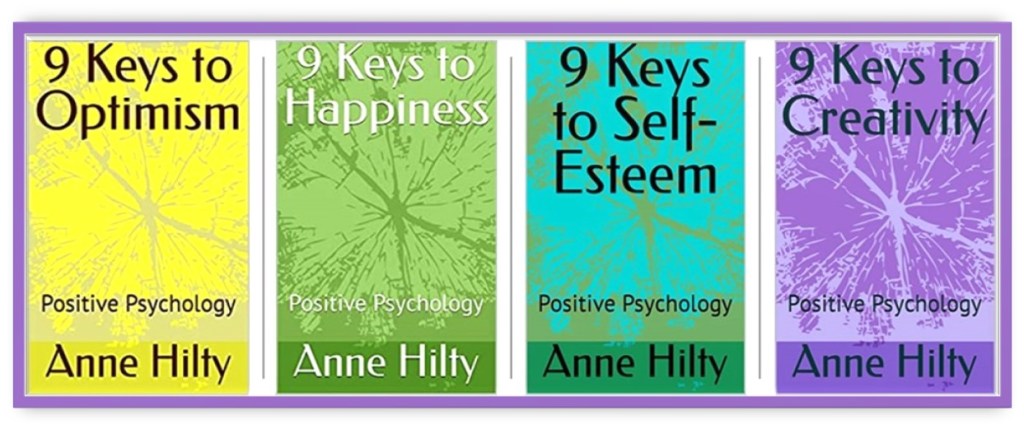
[excerpted from, 9 Keys to Creativity: Positive Psychology, ©2023]
Stay curious, as a very popular saying goes. (Often misattributed to Apple co-founder Steve Jobs, he actually ended a now-famous commencement speech with, “Stay hungry. Stay foolish.”) The phrase, widely adopted, refers in part to engagement: stay curious about and connected to life; maintain a wide array of interests. It also refers to innovation — the scientific face of creativity.
Our first key to ever more creativity must be our curiosity. The connection between the two, on the surface, is self-evident: how could we possibly engage in creative acts unless we were first curious to know more, try something new, or solve a problem?
Humans are innately curious; everyone who has parented a child, or even been in the company of one, knows that this quality comes naturally. (And how many Wikipedia wormholes have you fallen into recently?) There’s more than one type of curiosity, however, and while epistemic (cognitive) curiosity — the desire to learn and acquire new knowledge — relates directly to one’s intellect, perceptive (sensate) curiosity is a desire for novel experiences — the person who likes to try new things. Both correlate with creativity, though both may not be found in the same person.
But how does curiosity relate? And how do we consciously engage with and use our curiosity in order to enhance our creativity?
First, let’s look at some recent research.
Epistemic curiosity, or the desire to know and learn, was found by Hardy et al. (2017) to be a predictor of creativity in both performance and problem-solving; positively affected were both quality and originality, while the type of creativity was of no consequence. In the 2020 study of Gross et al., curiosity is established as a ‘seed’ for creativity. The researchers further differentiate between the two types of curiosity mentioned in our introduction, epistemic (cognitive, or the desire to learn new knowledge) and perceptive (sensory, or the desire for new experiences), and found that both lead to greater creativity. They mention the limitation, however, of curiosity as a state rather than trait – we may be innately curious, but it fluctuates over time and depending on context, which would have direct bearing on its contribution to our curiosity. However, as the premise of this book is to undertake activities to increase our creativity, in this case through our curiosity, for our purposes this is a matter in the hands of the individual.
Schutte and Malouff (2019), in a meta-analysis of 10 studies involving a total of 2,692 subjects, established a strong correlation between curiosity and creativity. In their 2020 study, they replicated such finding in an adult population (mean age: 35), while Evans and Jirout (2023) had similar findings in their study of primary school children. Hagtvedt et al. (2019) demonstrated a causal relationship, in that specific curiosity could indeed lead to greater creativity, and proposed a concept they call “idea linking”. Similar to the brainstorming technique of mind-mapping, when our curiosity is used specifically to link ideas to one another, we become more creative as a result. They further propose that idea linking isn’t only a mediator, but also can be used as a novel tool for deliberately fostering our creativity. (More on that later.)
Five categories of curiosity are measured on the 5 Dimension Curiosity Scale, according to Kashdan et al. (2018), including joyous exploration, deprivation sensitivity, stress tolerance, social curiosity, and thrill seeking. We can think of curiosity broadly in these ways – learning or trying something new because it brings us joy, a need to be ‘in the know’ and not excluded, a tolerance for stress that allows us to try new things, a desire to know more about other people, and an interest in excitement. These researchers also identified 4 types of curious people, rather than a simple dichotomy of curious-incurious, which they call: the fascinated (28% of sample), problem solvers (28%), empathizers (25%), and avoiders (19%).
So how can we be more curious? Firstly – by simply deciding to be. Ask questions, find an interest in other people, want to learn and to experience new things. Try a food that you haven’t had before. Learn a new language via an app – no one else needs to hear us, so the risk of embarrassment is minimal. Or if language doesn’t appeal, learn or try something else.
The point, really, is to be interested, potentially in everything. Naturally, we aren’t curious about all things equally, but we also don’t want to live always within our comfort zone. In order to grow our curiosity, we can embrace the general concept of diversity: read a book in a genre you don’t normally choose, try new types of music, spend time with people different from yourself – and ask questions, and truly listen. Take on a new hobby, one that’s different from whatever you normally prefer.
Embracing learning for its own sake is another dimension of curiosity, something that the Internet makes easy for us. If school wasn’t particularly pleasant for you, or didn’t come easily and was stressful, or you find that you don’t feel like learning new things, consider for a moment your Internet use. Chances are, you find yourself going from page to page via links to topics you hadn’t considered previously. The previously mentioned wormhole of Wikipedia, with its multiple hyperlinks, is a good example of this; any topic we may be reading about by choice will have a multitude of side topics, and the temptation to click on those other links as we read can be great. All of a sudden, we find we’re reading about types of galaxies, or what a Chinese character means, or how to knit.
If you’re a gamer, you’re also curious by nature and embracing learning. Video games are entirely about learning the new landscape each time you level up, and how to compete, and win. You’re not only continually learning, but at a highly accelerated pace. And each new game brings a whole universe of new learning to be undertaken.
Movies can be another category. Do you find yourself typically watching the same genre of film over and over? Are you into action movies, or rom-com, or documentary? (Okay, that last category is probably of interest to those who already embrace new learning.) Try movies in other genres. Even more, watch films made in other countries – streaming platforms make this easy, subtitles included – which greatly expands your knowledge of the world and its cultures. The same goes for books. If you find you always gravitate to the same genre of books, shake things up and read something entirely different. And again, be sure to include authors from countries other than your own.
Being curious when out in nature is a very easy task; there’s so much to see, learn, and experience. If trekking or camping, at the beach or in the forest, pay attention. There’s a whole world to discover. Travel, similarly, opens vast new horizons to us, in new cultures, languages, foods, customs, and generally having to learn the lay of the land in order to get around. Skip the tour guide. Make your own way. Learn everything. Be, stay, curious.
.
Exercises:
.
One of our most powerful tools for enhancing our curiosity is in asking questions – questions of someone else when we meet them (social curiosity), questions of ourselves when we’re in nature or really, at any time. Why? is a very good tool for curiosity-building, as is How? and all those other question words. As an exercise, take any object with which you are unfamiliar, and run through all the question-related words: what is it? Where is it used? Why would I, or anyone for that matter, want this? And so forth. We can run through this exercise an infinite number of times, and it’s an excellent skill to have as your default whenever you encounter anyone or anything new.
Another is the brainstorming style known as mind-mapping. When considering anything – object, intangible idea or behavior, which action to take, the character of another person – or your own, anything at all, begin by writing that topic in a balloon in the center of a blank sheet of paper, then beginning to brainstorm whatever comes to mind that’s in any way related – and draw the connections. Those connections will have connections of their own, too. (Think of this as your own retro, hand-drawn version of Wikipedia.)
Take a walk in the park, or in a forest. Take it slowly, peacefully, observationally. Be an explorer. Look around. Feel the quality of the air, the soil beneath your feet. Listen deeply. Listen some more. Taste the air. What do you smell? A natural setting is an excellent way to stimulate our curiosity, and the more detail you notice, the better. When you return home, take a sheet of paper and write down as much of your observation as you can recall.
Are you curious about other people? Are you a good listener? Do you recall what they tell you? Meet someone new, or meet with someone you don’t know well. Ask them questions. Display your curiosity (without being overly intrusive, of course). Ask further questions based on their replies.
Curiosity consists of our desire to know, and to experience, new things. If we’ve gotten into the habit of always doing things the same way, watching the same types of programs and reading the same books or websites, or any other routine, we need to step out of that pattern and seek out new things and people. It may be less comfortable. But it will expand our ability to be curious, and our creativity as a result.
.
References:
Evans NS and Jirout JJ (2023). Investigating the relation between curiosity and creativity. Journal of Creativity 33:1, 100038. https://doi.org/10.1016/j.yjoc.2022.100038
Gross ME, Zedelius CM, and Schooler JW (2020). Cultivating an understanding of curiosity as a seed for creativity. Current Opinion in Behavioral Sciences 35, 77-82. https://doi.org/10.1016/j.cobeha.2020.07.015
Hagtvedt LP, Dossinger K, Harrison SH, et al. (2019). Curiosity made the cat more creative: Specific curiosity as a driver of creativity. Organizational Behavior and Human Decision Processes 150, 1-13. https://doi.org/10.1016/j.obhdp.2018.10.007
Hardy JH, Ness AM, and Mecca J (2017). Outside the box: Epistemic curiosity as a predictor of creative problem solving and creative performance. Personality and Individual Differences 104, 230-237. https://doi.org/10.1016/j.paid.2016.08.004
Kashdan TB, Stiksma MC, Disabato DJ, et al. (2018). The five-dimensional curiosity scale: Capturing the bandwidth of curiosity and identifying four unique subgroups of curious people. Journal of Research in Personality 73, 130-149. https://doi.org/10.1016/j.jrp.2017.11.011
Schutte NS and Malouff JM (2019). A Meta-Analysis of the Relationship between Curiosity and Creativity. Journal of Creative Behavior 54, 940-947. https://doi.org/10.1002/jocb.421
Schutte NS and Malouff JM (2020). Connections between curiosity, flow and creativity. Personality and Individual Differences 152:109555. https://doi.org/10.1016/j.paid.2019.109555
 Anne Hilty, PhD