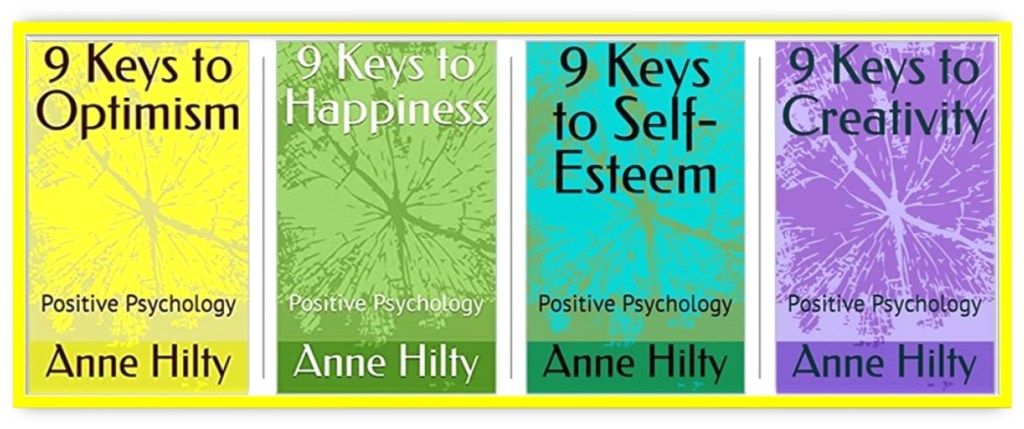
[excerpted from, 9 Keys to Optimism: Positive Psychology ©2023]
Zest. Vitality. Resilience. Thriving. Yes, please.
When you awake in the morning, do you do so easily? Delighted by a new day? Looking forward to what it will bring?
Do others consistently tell you that you have a lot of energy or enthusiasm? Do you feel so?
Are you the type of person who takes on new projects or endeavors wholeheartedly, giving it your all? Do you think of yourself as diligent, a person of dedication and follow-through?
Even when you fail at something (because we all do, at times), are you the sort to ‘pick yourself up, brush yourself off, and try all over again’ – as the old song goes?
Then you, dear reader, are a person of zest.
We all are, in fact, as with all 24 character strengths. It may be under-represented in some, and over-emphasized in others (again, this can be true for any of the 24), but it’s there, nonetheless. Zest doesn’t depend on one’s physical capability or energy, either, but on one’s approach to life. And surely, in the face of depression for example, it may be difficult to access. It may be sleeping. But it’s there, deep within, nonetheless.
Interestingly, this character strength is situated within the ‘courage’ category or virtue. The VIA Institute defines zest as an attitude toward one’s life which includes energy and excitement, a driven, wholehearted approach to life as an adventure. Life satisfaction and engagement, also referred to as ‘flow’ and related closely to creativity, are most strongly associated with this strength, as are physical and mental health.
One’s zest for life, above all other character strengths, appears to be the most predictive for subjective wellbeing, as demonstrated in the recent study by Gander et al. (2022). They found mastery, or self-efficacy, a belief in one’s capability, to be its most important outcome, and that, along with hope and curiosity, it showed function across a multitude of dimensions.
Zest for life enhances pleasure, along with humor and hope (Wagner et al., 2020). It’s been shown to reduce depression, particularly through the mediation of gratitude (Lam, 2021), increase pain tolerance and function in spite of pain (Graziosi et al., 2022), promote wellbeing and prevent burnout among physicians (Kachel et al., 2021), contribute to mental health — most highly when in combination with hope, gratitude, and love (Blasco-Belled, 2022).
So, how can we increase our vitality – our zest for life?
As with any skill or strength, by practice. What in your life makes you feel truly enthusiastic? What’s your passion? Do you have a deep love for animals, for nature, for environmental activism? Are you all about gender equality, or women’s empowerment in the workplace? Do you love to compose music, paint, or write poems? The possibilities are endless. The more zest for life we have, the more of it we deeply love. To access your zest, and to feed and grow it, identify your passion – and do more of that. Then, consider a second one. And a third. Quantity isn’t really the point here – but just one passion can become an obsession, too singular a focus, while if we have 2 or 3 passions in life, we become more enthusiastic overall.
.
Exercises:
Contemplate the question, ‘What’s your passion?’ Perhaps meditate on the topic. Then, write in a journal, do a brainstorming or mind-mapping exercise, or discuss with a friend – somehow, externalize it. Just thinking about the things that spark our enthusiasm makes us feel more enthusiastic.
Try to do the thing you’re most passionate about on a very regular basis. If it’s sailing, for example, that might depend on many factors – the weather, larger periods of free time, the season, access to a boat. If so, make a plan for doing that activity at whatever intervals seem realistic – but, regularly. If your passion is something more readily accessible, perhaps do it weekly – or even daily.
What’s something you feel enthusiasm about or deep interest in, but aren’t actually engaging in? Can you find a way to integrate that passion into your life?
When you awake, if you aren’t the type to bounce out of bed, try this: when the alarm goes off, sit up in bed, take a deep and cleansing breath in and out, and say aloud (or in your head, if someone is sleeping next to you!) 3 things you’re looking forward to that day. If a work day and you’re not so enthusiastic about your job, perhaps have a favorite food at lunch, maybe even with a work friend. Maybe it’s a movie you plan to watch that evening. Perhaps the end of the work day itself is one of those things you’re anticipating. (If so, you might want to consider a change in workplace – or another line of work altogether.) Can you come up with 3 things? Every morning? Our lives don’t have to be ideal – one of the things we’re looking forward to might be a sunny day, or seeing springtime flowers.
Cultivate gratitude, and mindfulness (both to appear later in this book). They help to enhance our zest for life – and in turn, optimism.
.
References:
Blasco-Belled A (2022). Character strengths and mental health as complex systems: a network analysis to identify bridge strengths. Current Psychology. https://doi.org/10.1007/s12144-022-03598-7
Gander F, Wagner L, Amann L et al. (2022). What are character strengths good for? A daily diary study on character strengths enactment. Journal of Positive Psychology 17:5, 718-728. https://doi.org/10.1080/17439760.2021.1926532
Graziosi M, Yaden DB, Clifton JDW et al. (2022). A strengths-based approach to chronic pain Journal of Positive Psychology, 17:3, 400-408. https://doi.org/10.1080/17439760.2020.1858337
Kachel T, Huber A, Strecker C et al. (2021). Reality Meets Belief: A Mixed Methods Study on Character Strengths and Well-Being of Hospital Physicians. Frontiers in Psychology 12:547773. https://doi.org/10.3389/fpsyg.2021.547773
Lam KKL (2021). The mediating effect of gratitude in the relationship between zest for life and depression. Personality and Individual Differences 171:110476. https://doi.org/10.1016/j.paid.2020.110476
VIA Institute on Character. VIA Character Strengths Survey and Character Reports. Retrieved April 16, 2023, at https://www.viacharacter.org/
Wagner L, Gander F, Proyer RT et al. (2020). Character strengths and PERMA: Investigating the relationships of character strengths with a multidimensional framework of well-Being. Applied Research in Quality of Life 15:2, 307-328. https://doi.org/10.1007/s11482-018-9695-z
 Anne Hilty, PhD