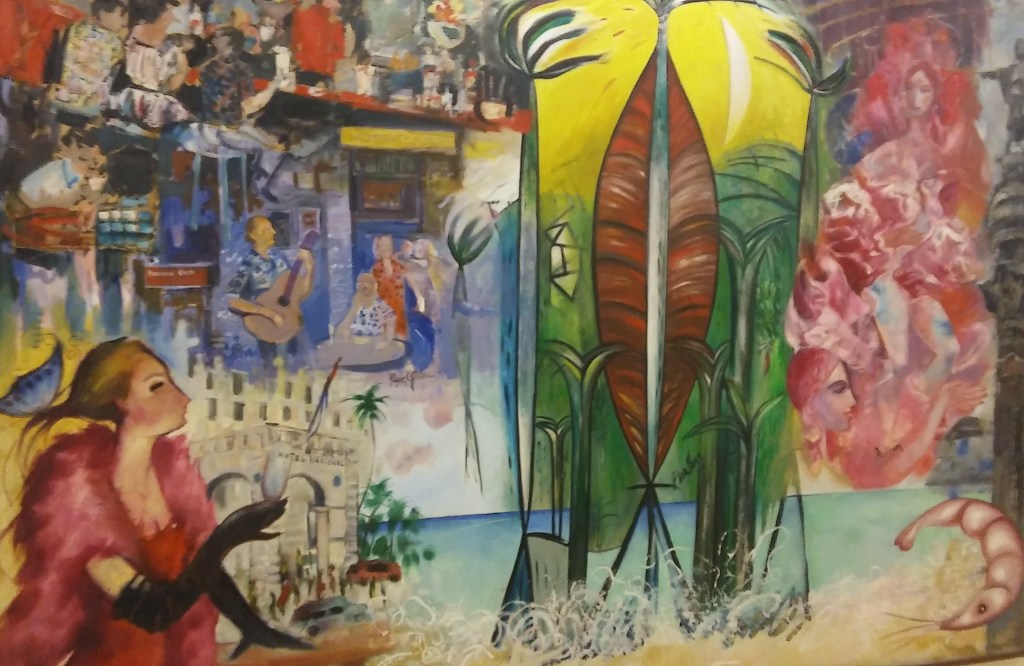
[excerpted from, Stories Across Cultures: Latin America & Anglo, by Anne Hilty, ©2023]
Long closed to US citizens, Cuba was for me the forbidden fruit.
And then: there was the lure of Santería. (Have I mentioned my longstanding interest in all things occult?)
In June 2017 I finally had the opportunity.
A sampling of my observations by the end of my stay:
– as a non-capitalist society, Cuba has NO advertisements – no commercials on television, no billboards or posters or placards or newspaper ads … which felt quite alien but very refreshing to me.
– conversation (in Spanish, of course) with the taxi driver who brought me from airport to accommodation upon arrival quickly established that I was simpatico with the people of Cuba: (a) I’m originally from US but have lived elsewhere since early 2005, currently in Hong Kong; (b) I live outside of US largely for sociopolitical reasons; (c) I was in Havana for cultural research, to better understand Cuba and its people; and, (d) that we both agreed, Trump es loco…y mal. Muy mal.
– Cuba is a lot about ‘the hustle’, or locals trying to make an extra bit of cash any way that they can – and if you understand the game and its underlying causes, you can play along without frustration.
– Cuba has to import 80% of its food, despite being rich in farmland – as it’s dedicated primarily to the production of tobacco (for cigars) and sugar cane.
– Cuba has a long history of slavery and colonization, issues of which continue to play out today.
– Though only 3% of households have Internet connection, the public parks and plazas which now have WiFi-for-pay access are filled with smartphone users. Before 8am, and until at least midnight, all public parks and plazas are filled with people –not only for the WiFi, but as primary public space and sense of community. The Malecón, too, and famously, that curved stretch of coastline along Havana’s north border, is filled with people every evening and much of the daytime, as social space.
– Women are quite strongly and constitutionally integrated into the professional and public arenas – 48.9% of Parliament positions, a law declaring household work to be equally the responsibility of women and men, subsidized daycare, more women than men in universities and in medicine – but are still subject to domestic and other violence, with campaigns and programs to raise awareness and change public norms.
– The economic crisis is of complex origin, including not only systemic failures and the more than 50-year US embargo, globally condemned (in 2016, by all 191 UN-member countries save US and Israel), but also the fall of the Soviet Union and turmoil in Venezuela as well as several devastating hurricanes in recent years.
– Cuban TV includes French, Japanese, British, Mexican, and US programming; strong emphasis on educational and cultural programs; Latin American press conferences; and a good deal of music, as well as a wide variety of sports.
– TV public announcements are not political but focus on the campaign to stop gender-based violence, and an urge for those with addiction to alcohol, drugs, tobacco, or caffeine to seek help – for their sake, and for their families.
– Despite this long attempt at socialism, there are still ‘haves’ and ‘have-nots’ in the society.
– Fidel en nosotros. Fidel [Castro] in us.
– Cuba is advanced in science, medicine, education, sports, arts (visual, music, dance, literature), intellectual / philosophical pursuit, safety, cleanliness, community, and gender equality; it knows itself and its place in the world, and involves itself with the international community.
– Cuba is deficient in infrastructure, cuisine and food security, availability of goods, Internet access, and still has a patriarchal and machismo culture, despite the egalitarianism of socialist ideals.
– Cuba is phenomenally complex.
And then: Santería. Of African origins (diaspora, by way of the Atlantic slave trade), Santería developed in Cuba during the late 19th century; it represents elements of the animist tradition of West Africa’s Yoruba people, plus Catholicism, plus Spiritism – a mid-19th century movement in France. Polytheistic and highly complex, a key aspect is that of orishas or spirits with specific names and purposes, who ally with humans. To appease them requires worship in the form of elaborate ceremony, in order to cultivate the relationship; the practice is initiatory, with a santero/a (priest/ess) and various forms of casas (literally, ‘house’, it refers in this case to places of worship): casa templo, or de santos, or de religion, or simply ilé (place, home of the santero/a). The religion bears some resemblance to Haitian Vodou and Brazilian Candomblé, and is viewed by Catholics in Cuba as brujería (witchcraft).
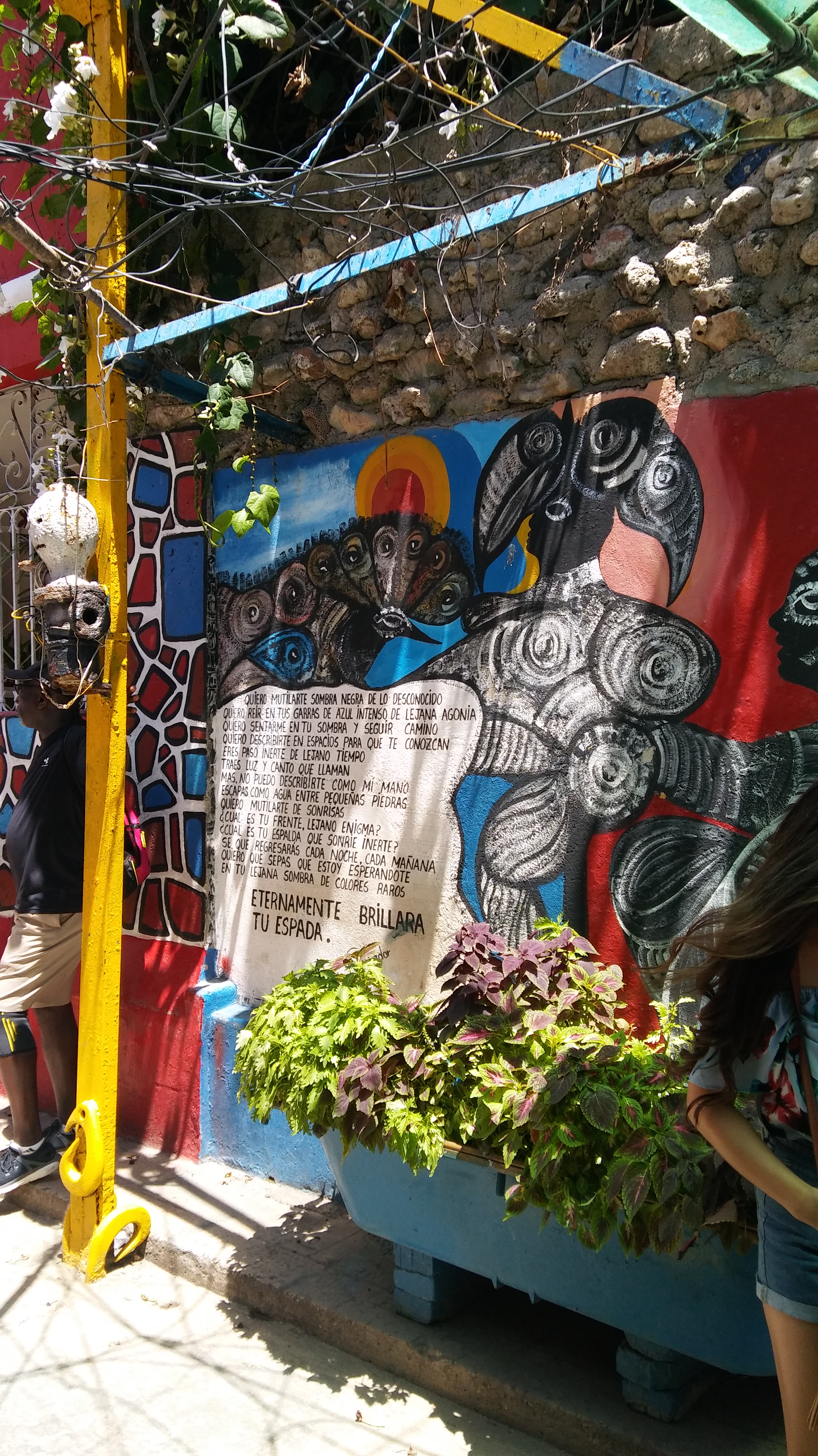
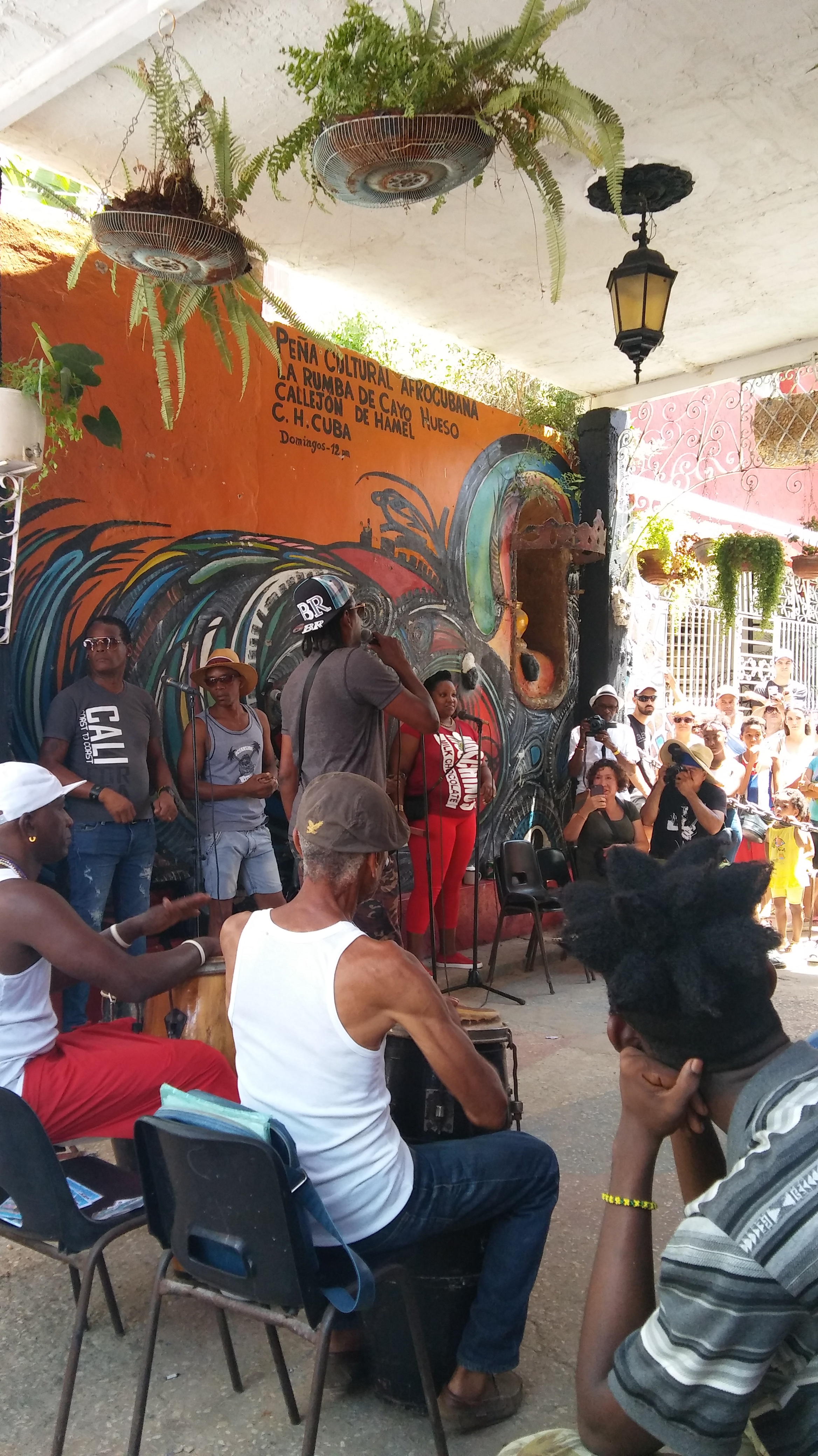
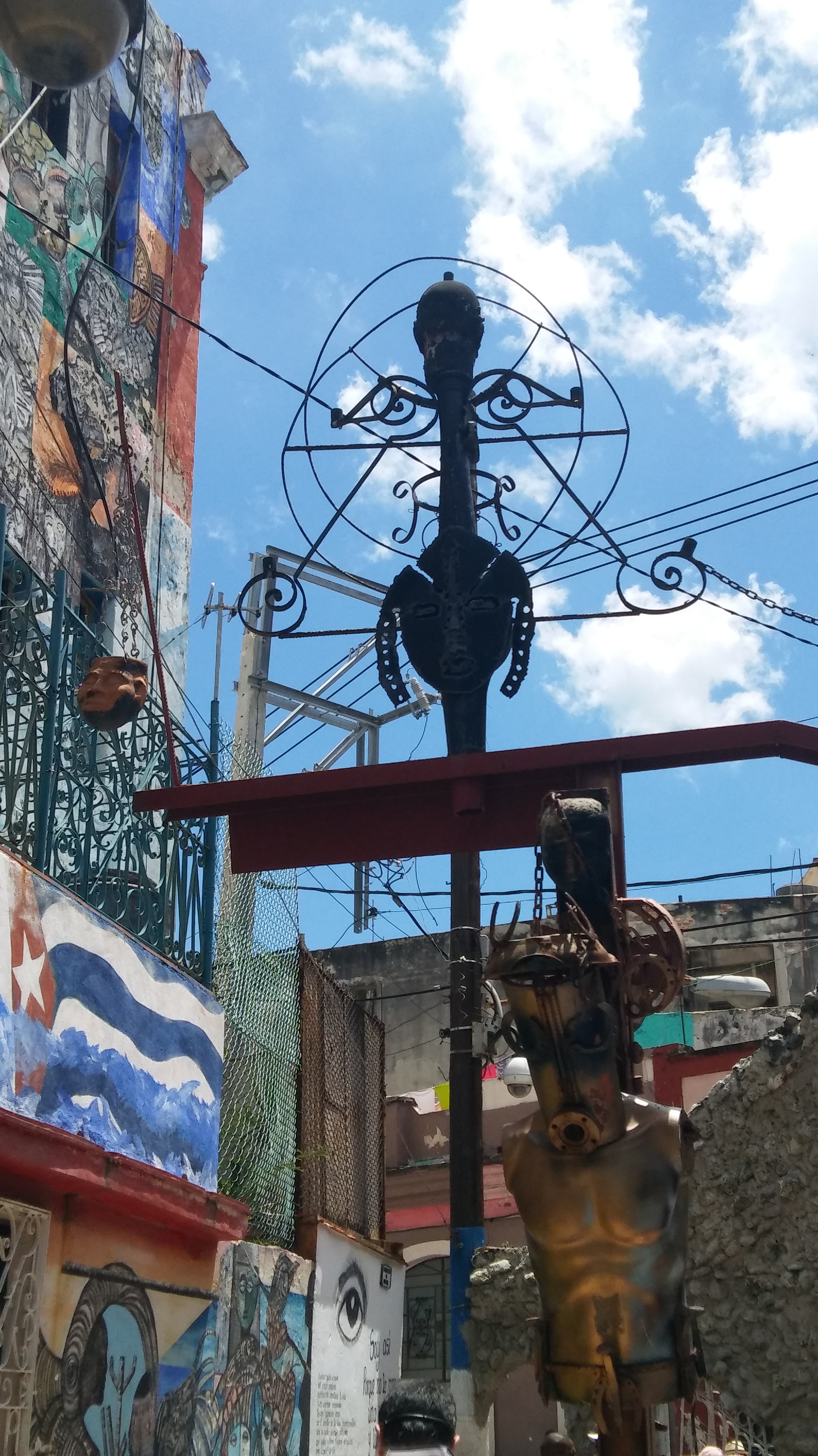
As I was in Havana, I headed for Callejon de Hamel. While a bit on the touristic side, it is nevertheless a community for Santería practice including related art and music, with a collection of establishments such as galleries, divination, and the like. There I had multiple opportunities to discuss the tradition with devotees as well as santeros.
For spirits of another sort: Fabrica de Arte Cubano, a magical wonderland. Multipurpose gallery and nightclub, in a former cooking oil factory and therefore quite large, it opened February 2014, begun by a group of artists and funded in part by the government. Time included it in the magazine’s 2019 list of 100 Best Places in the World, citing its “originality, sustainability, quality, innovation and influence.” The space unfolds into many smaller rooms at multiple levels, some for performance, others for exhibits, still more for dancing (lessons, too!) and dining, even an indie film. It is widely seen as a symbol of the country’s regeneration, and while Havana was once a playground for the world’s wealthy, since its socialist era it has fallen far from this image – yet, Fabrica de Arte Cubano takes a leap toward restoring the city’s former glory.
A few more items of note:
The Women’s Federation was begun in 1960 by Vilma Espin, a revolutionary who became the wife of Raul Castro [national president 2006-2018, including the time of my visit], and presided over by her until her 2007 death. The Federation is still going strong, with 4 million members.
Museo de La Revolución, in a former presidential palace, is devoted not only to the 1953-59 endeavor to overthrow Batista who had taken control of the government by coup in 1952, but also to the society built since that time. It powerfully depicts Cuba’s view of its struggle to establish a socialist society, including the fight to this day with the US, its embargo, support of the Soviet Union until its collapse and the crisis that precipitated in Cuba, and more. The building itself is rather grand, as one might imagine, as are the views of Havana from its various upper story windows.
A shopping mall, of sorts, in a non-capitalistic, non-consumer-oriented society, is an anomaly. Very basic supplies only, not a place to socialize nor for entertainment, it is purely utilitarian. Otherwise, it’s all small shops, street vendors, and officially supplied necessities, while the casa particular homestay program for tourists provides income for many. In late 2021, however, the government approved the first 500 or so micro, small, and medium-sized enterprises in its first steps to economic reform.
I always expected to love Cuba. (I’d spent 2 years of my earlier life in southern Florida, not far from Miami and its very large Cuban diaspora, and there had been quite a few Cubans in New York, too.) The longstanding disagreement between Havana and Washington ideologically placed me on the side of the former, too.
Cuba isn’t easy. Its infrastructure is often insufficient, and even while I’m capable in the language, there is much that I don’t understand – and with infrequent Internet at best, I can’t easily access information. Yet, without any doubt, it is a glorious culture and island.
I hope to return before long.
 Anne Hilty, PhD