Category: Uncategorized

Intercultural Competence, Ch.2: What’s Intercultural Competence?

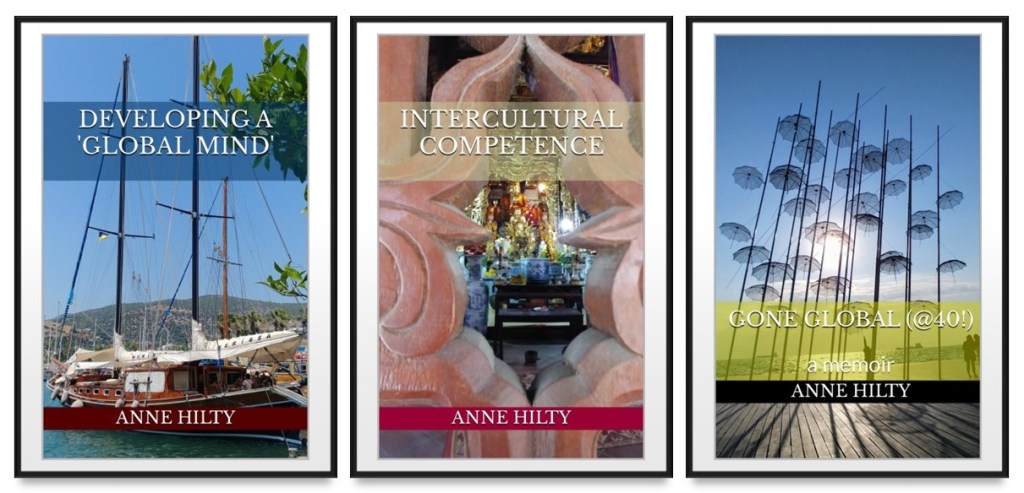
[excerpted from, Intercultural Competence, ©2023]

Our Big Question: Is it possible to know, deeply and in detail, all the cultures of the world? What, then, is intercultural competence…and why is it so difficult?

Darla Deardorff, a cross-cultural educator and research scholar whose model of intercultural competence we’ll soon review, has defined this as “the ability to develop targeted knowledge, skills and attitudes which lead to visible behavior and communication that are both effective and appropriate in intercultural interactions.” Global competence, meanwhile, which integrates concepts of both intercultural competence and global citizenship, is identified by OECD as “the capacity to analyze global and intercultural issues critically and from multiple perspectives, to understand how differences affect perceptions, judgments, and ideas of self and others, and to engage in open, appropriate and effective interactions with others from different backgrounds on the basis of a shared respect for human dignity.”

There are 4 primary capacities we aim to achieve, in order to consider ourselves interculturally competent. The first is to investigate the world beyond our immediate environment; we identify and frame cultural features and significant issues, through well-crafted research. This may seem obvious, in the way of all starting points. But the vast majority of people worldwide aren’t willing to expand beyond the culture that they know, even their own immediate experience of it; in that small and very familiar setting, we already feel some measure of competence, while everything outside of it represents the unknown – and hard work to gain any true understanding.

Our second intended capacity is in the recognition of perspectives – one’s own, and others’, becoming proficient in articulation of same in a thoughtful and respectful manner. We all have an inherent knowledge of our own culture following many years of indoctrination as we reach maturation; however, being able to identify and explain that to others is far more difficult. If someone asked you, “What’s your essential worldview?”, you may find it rather difficult to respond intelligently, unless you’ve already given this much consideration. And as we strive to continually build our knowledge about the cultures of others, we must also be able to articulate it in detail – and with respect, not presuming to speak for or to other people about their own culture. Rather than telling, this involves asking questions – “Am I correct in thinking that this is a feature of your culture?” – and in conveying such information to others as one’s own observation – “I’ve seen…” or “In my understanding…” and similar.

In our 3rd capacity, we must communicate effectively. Intercultural communication is especially challenging, as we’ll later see. Even speaking the same native language is only a small part, as communication styles and patterns, body language and facial expressions, and much more can all differ widely; a ready example of this would be communication between British and American people, for example, as in that well-known (and variously attributed) phrase, “one people divided by a common language”. Our capacity, then, is in communicating well across all manner of barriers: cultural, linguistic, geographic, and ideological.

Our final capacity for intercultural competence is to take action. We engage with those of cultures other than our own, through travel, international business and conferences, multicultural online events, or highly diverse urban populations. We take action to improve global conditions, as a member of our shared humanity but also specifically as a means to greater intercultural understanding. The immediate and near-overwhelming issue of climate change, for example, is universal but affects various places and peoples in different ways; those in coastal regions, for example, or desert climates, are at more immediate and greater threat than those elsewhere. Another primary global issue is food insecurity; we currently see this in Türkiye where I live, for example, due to very specific issues both of the nearby war between Ukraine and Russia which has disrupted grain supply chains in the region, and in the aftermath of the earthquake in south-central Türkiye earlier this year that affected key areas of agriculture.

And so – for intercultural competence, we need to cultivate a skill set, knowledge base, and certain attitudes or traits. Our skill set includes analytical and critical thinking, flexibility, empathy, effective communication, and respectful and appropriate interaction. We must also gain competence in intercultural knowledge and understanding, and in the understanding of global issues and how they affect cultures both similarly and differently. Openness toward people from other cultures and respect for cultural differences are essential traits, along with a general global mindedness and sense of responsibility.

We can think of these areas of understanding in a cognitive-affective-behavioral framework. In the cognitive or intellectual arena, we must first obtain cultural self-awareness by which we understand our own cultural features more deeply; to that we add cross-cultural knowledge both general and specific, and finally, interaction analysis, by which we can interpret and infer from the customs and behaviors we observe in people of cultures other than our own.

In the affective or emotional aspect, we understand through our curiosity, which generates our interest in others; we also cultivate our flexibility, so that we may more easily adapt to those cultural habits and customs different from our own. We further benefit from our internal motivation to better understand, and by our open-mindedness toward other peoples and cultures, their values and worldviews. In the behavioral category of understanding, we learn through relationship-building with those different from ourselves; this includes listening and problem-solving skills, too, as well as empathy extended toward others in our ability to identify commonalities. Finally, information-gathering is a behavioral skill; we can improve our research capabilities, our study habits, our skills for finding the most accurate and reliable cultural resources. Media literacy is included in that last skill set, by which we learn to analyze media content and validity.

But why is this competence so difficult to achieve?

First, the scope is vast. We can’t learn about each individual culture in depth, of course, as not only does the world have numerous countries, but countless subcultures also exist within each one of them. If you’re from France and do business with China, for example, then you would do well to learn as much as you can about Chinese culture – but China is an enormous country with 1.4 billion people and many regional distinctions. This is cultural competence but in a very narrow sense; for true intercultural competence, one must be able to move about the world and communicate with relative ease.

No small task. I’ve lived and traveled globally for many years, with a specific objective of intercultural competence and engagement. I’ve learned a good deal – and, there is so very much more that I don’t know.

Within a single culture, as earlier referenced, that cultural iceberg becomes relevant. Even when thinking of our own, inherently known dominant culture (with the understanding that we too consist of multiple subcultures), it’s far easier to see the behaviors and artifacts than it is to understand those values, attitudes, beliefs, norms, and assumptions.

Thinking and learning about the cultures of others, while intellectually intriguing, is also unnatural to us. The human brain can only actually maintain true relationship with a small number of people, and tribal identity is embedded in our species from earliest times, just as other species form in-group identities of herd, flock, or pack. We’re biologically hard-wired to perceive ‘outsider’, ‘other’, ‘difference’ as potential threat, seen in infancy as ‘stranger anxiety’. Reaching across those inherent boundaries is emotionally hard work, every bit as much as the acquisition of cultural knowledge and bridging of language barriers.

Our own ethnocentrism – unconsciously viewing all other cultures through the lens of our own as the norm – is yet another enormous barrier, albeit one which we can strive to recognize and transform. Even well down that road of self-development, however, new biases will continue to surface, and so we must remain vigilant.

Finally, two areas of difficulty to all humans. Intercultural competence requires critical thinking and analysis, while most of us are accustomed to thinking more superficially or lazily, taking the easy way, using mental heuristics. Even as we begin to develop our global consciousness, complete with a commitment to deep thinking along with self-reflection and analysis, we will then be very tempted to apply what we’re learning too broadly across cultures – and perhaps stop searching further for nuances of interpretation. A part of reflection is the continual questioning of our assumptions.

And, this competence requires flexibility and adaptability. We humans aren’t generally comfortable with change and uncertainty, never mind the willingness to be wrong – a humbling factor. In your encounter with members of cultures other than your own, the reality is that you will most often be unsure, ignorant, and continually expected to adapt. Working to decrease your discomfort with uncertainty is key.

Difficult, yes. But this process can also be highly enjoyable.

If you find gaining new knowledge and skills exciting, this is for you. If you like to challenge yourself: ditto. If you find other cultures endlessly fascinating, you’ve found your calling. And if you’re willing to laugh at and continually second-guess yourself, it will also be an endless source of amusement.

Proficiency in (or at least awareness of) foreign languages is one key to cultural understanding. I’ve studied a number of languages. I’m only truly fluent, at an advanced academic and perhaps philosophic level, in my native language, while I’ve a basic ability in a few more. This isn’t about mastery, however, so much as it is about expanding your cultural awareness; language is culture is language is culture is – well, you get the picture. You’ll never understand a person’s culture, to the degree that one can anyway when not a product thereof, unless you’ve at least a glancing knowledge of the language. What’s more, language study expands the brain toward a general multilingual and thus multicultural worldview.

If you haven’t an aptitude for language study, don’t worry. There are several ways to go about this, all of which will enhance your cultural awareness and global mindedness, some of them especially fun. You can watch films in other languages while reading subtitles in your own; this gives you an ‘ear’ for the language even if you aren’t learning anything, all the while that you’re viewing a product made in another country and reflective of that culture. (This is especially easy on a video streaming platform.) You can listen to music from countries other than your own, in any genre that you prefer, and again you’re experiencing other languages even if not technically studying them (and similarly, a music streaming platform makes this simple). A favorite of mine is to use a language app for daily home study, even if just 15 minutes a day – and to vary among languages for a true challenge. (I’m currently studying 12 widely diverse languages by this method, one lesson in each of 2 languages per day as I rotate among them – two devices, you see, with 6 languages each.)

So, while we’re studying and skill-building and capacity-increasing and the like…let’s have a bit of fun with it, too.

.

Exercises

Discussion or Contemplation: What is my current level of intercultural understanding? What are potential difficulties as I develop this capacity?

Writing or Recording: How have I developed my intercultural understanding to this point? And how would I like to develop this, and why?

Further Reading: What Does Intercultural Competence Mean? https://www.commisceo-global.com/blog/what-does-intercultural-competence-mean
Developing a ‘Global Mind’, Ch.2: Barriers: Ethnocentrism & Stereotypes

[excerpted from, Developing a ‘Global Mind’, ©2023]

Our Big Question(s): In what ways do I view my culture as superior to others, or the norm? What stereotypes do I have about other cultures?

So, now we understand what ‘global mind’ (or global mindedness, perspective, orientation, or consciousness) means, and what it takes to consider oneself a citizen of the world. We’re excited to develop our global perspective and to improve our understanding of the world and its peoples. But what can we expect to get in our way?

Internally, we all have two fundamental barriers: ethnocentrism and stereotypes.

Two women are depicted in a drawing: one wearing a bikini and sunglasses, the other in a burka. The thought bubble over the bikini-clad woman, regarding the other, is: Only her eyes are uncovered; she must be from a repressive, male-dominated society. Meanwhile, the parallel thought bubble over the burka-clad woman is: Only her eyes are covered; she must be from a repressive, male-dominated society.

A speaker addresses a table of 4 regional representatives: What’s your opinion on food shortages in the rest of the world? Their replies: (Africa) What’s ‘food’? (Europe) What’s ‘shortages’? (America) What’s ‘rest of the world’? (Arabia) What’s ‘opinion’?

Both of these depict ethnocentrism. (The latter is also clearly stereotypical.)

Ethnocentrism refers to a central focal point based on one’s ethnicity – ancestry, heritage, and/or cultural background. It’s a natural tendency to view the world through one’s own cultural filters; often, it includes an unconscious bias that one’s own culture or group is superior to others.

When a traveler or foreign resident complains about another culture in terms such as, “Why do they do X the wrong way?” or, “Don’t they understand that it would be better like this?” or, “Isn’t this strange [funny, confusing]?” – they’re expressing their ethnocentrism. Rather than seeing the custom in question simply as the other culture’s way, it’s automatically viewed in comparison to the speaker’s native culture as the norm or standard.

This is natural as most of us grow up within one dominant cultural matrix (though complex, as already mentioned – and more on this in our next chapter), our worldview deeply embedded from earliest childhood so that we aren’t aware of our assumptions that it’s the norm. In reality, it’s simply one view of many, and as we develop our thinking, we move through various stages toward true understanding. Even so, throughout our lives as global citizens, we must continually check ourselves against our ethnocentrism – our natural lens.

The problem with an ethnocentric view, of course, is that we’re seeing the world through a narrow lens of which we’re largely unaware. It prevents us from seeing other perspectives, much less respecting them, and stunts our ability to be empathetic. It also contributes to many a false assumption and misunderstanding – for not only do we think that those behaviors and viewpoints in contradiction to what we presume to be the norm must be wrong, or at the least strange; we also wrongly assume that we understand the actions and thoughts of others when we are simply incorrect, based on our unconscious biases.

Naturally, this can also create conflict (I’m right / you’re wrong), and leads to stereotypes (everyone/all are this or aren’t that). It can be used to promote ‘in-groups’, a tribal ‘us vs them’ mentality –and tribalism or group identity is very much on the rise throughout the world, as has been well documented. This leads to very dangerous thinking and in its extreme forms manifests as racism, colonialism, conflict and war, and even ethnic cleansing or genocide. Surely, ethnocentrism is the very opposite of global mindedness, though as our natural state – we are the product of a culture or cultures, after all, and all throughout childhood we’re taught how to be a member of our society – what to think, how to act, what to believe, and how to interpret the actions of others – and are also eager to belong, to fit in. By the time we reach adulthood, then, we’re only minimally aware of our acculturation and of these deeply embedded filters or biases. Too, it can be very seductive, empowering even, to believe that we’re right, and superior to others.

We can’t eradicate our ethnocentrism entirely. We’ve had 20 years of training before we reach adulthood, after all, and most of us continue to live in the society in which we’re expected to understand cultural cues and social behaviors and interaction. Anyone who’s neurodivergent, finding it difficult to ‘read’ others or follow the expected behaviors of society, knows how painful and isolating this can be. What we can do, in our quest for global citizenship, is to work toward a ‘flexible ethnocentrism’ – an ever-increasing awareness of our cultural biases, and the objectivity of setting those aside when in the presence of cultures other than our own. When in Rome, after all….

The second barrier to our development of global mindedness, and equally narrow in perspective, is that of stereotypes. You may feel that you haven’t any, or few, that you’re very open-minded, empathetic, and accepting of others. I hope that’s true. You still have stereotypes. We all do. Many of them, in fact, are unconscious. Many of them are likely to be based in just a grain of truth, which is also what makes them so difficult to transform.

Do you feel that the French (or at least Parisians) are arrogant? That Germans are inflexible and unemotional? That the Chinese are dishonest, or obsessed with making money? That those from US are superficial and materialistic? That all Africans are poor and uneducated? That Mexican men are all macho, or gangsters? That Russians, or Turks, are aggressive? That Arabs are conservative and intolerant?

Did any of that make you cringe?

What about: women/men are __, teenagers/elders are __, rich/poor people are __, (and don’t get me started on religions) –?

Stereotypes are generalizations. There may be an element of truth to many of them; surely some members of each group could fit that description. The typing is in the assumption that all members share a particular characteristic – even when it’s a positive one. (Not all Asians are good at math and science, for example. And no one, ever, likes for assumptions about them to be made based on their group identity.) The problem lies in that generalization; it’s an oversimplification, a mental shortcut or heuristic, weak thinking at best. And as stereotypes are absolutes, they’re always wrong. No group is 100% anything. Ever.

The problem is not only in the assumption, and inherent misunderstandings; stereotypes quickly lead to prejudice and on to discrimination. The problem is also that they’re often unconscious. In our quest to become global citizens, then, to develop a global perspective and engagement with the world, we must continually check ourselves for any unconscious beliefs and biases we may have. Look for those red flags in your thinking: everyone/all, always/never, and other indications of generalizations or absolutes. I often find my own hidden in languages; as I’m studying a particular language (13 of them, currently), I sometimes have a certain reaction to its sounds, structure, or vocabulary, and on further examination, cultural assumptions may appear. Sometimes, our stereotypical beliefs only become apparent when we encounter people from a particular group – cultural, political, religious, gender, age, or other – and we experience a visceral reaction as our formerly unconscious beliefs begin bubbling up to the surface.

So how can we overcome our biases?

We must begin by making a concerted, ongoing effort to avoid assumptions and especially absolutes – in all aspects of life. Anytime we take that mental shortcut and assume we know or understand something, we must ask ourselves: do I really know this? Am I certain? Could I be mistaken, or misinterpreting? This type of reflection will greatly reduce the amount of our assumption. And when we recognize those absolutist red flags in our thinking or speech, when we’re saying I/they always/never, or everyone or all, we must stop and ask ourselves: is this true? Can I say with certainty that this is 100% true? If not: change it.

When I’m in a circumstance with people from a culture other than my own, for example, even if I know a great deal about that culture, after our encounter has ended I must reflect: did I interpret that situation correctly? Did I truly understand what they said, and meant, and the meaning of their actions, expressions, body language? This isn’t self-doubt so much as simple reflective exercise – which always takes one’s thinking to a deeper and more comprehensive level.

Knowledge is always helpful, and for the budding global citizen, knowledge about other cultures, world systems, and global challenges especially so. The more we know, the less we assume – and the more we realize that there are few absolutes in this world. Even so, no matter how much knowledge we may have about a certain situation, we do well to reflect and consider alternate explanations. (This applies to those encounters within our own culture, too.)

As well, we must work to avoid judgments about what’s right or wrong. This isn’t moral relativism – I’m not saying there’s no such thing as ‘right’ or ‘wrong’ – only that ‘different’ is not equivalent to ‘wrong’. This is ethnocentrism in action, when we find ourselves wondering, why do ‘they’ do this in such a strange, or wrong, way? We’re only unconsciously comparing the situation to our own cultural programming, which we inherently assume (there we go again) to be the norm.

Above all, of course, though not always easy, is to remain respectful. When we don’t understand the other person’s thinking or action, when a custom or behavior seems strange, we do well to ask questions of them in a respectful manner. In addition to reflecting on our own interpretation, asking questions – I think this is what you mean – or am I wrong? Am I understanding this situation correctly? Could you tell me more about that, or explain this to me? I’m genuinely trying to understand – will go a very long way to actual understanding.

Let’s talk now about cultural relativism, and cultural pluralism.

Cultural relativism presumes that there are no universal ethical truths, but that ethics are relative to each culture. What one culture sees as right behavior or value may be the opposite view in another, and no such values or ethics exist that are the same for all. Rather, the customs of each society are all that truly exist, and each decides what’s right for them. When we approve or disapprove of another culture’s values, beliefs, or customs, we’re doing so on the basis that there’s some mythical universal truth.

Naturally, there’s a grain of truth to this. But what about a culture that feels it’s acceptable for a husband to beat his wife? Or for boys to be educated but not girls? Or for people of a lower socioeconomic class to be treated as unclean or non-human, or even enslaved? And while many a society has engaged in conflict, mass murder, even genocide, isn’t it a universally accepted value that murder of one human by another is wrong? But – what about soldiers engaged in war? A Buddhist society might think that eating animal flesh, or even killing a mosquito, is morally wrong; a secular culture or one based on another religion may have no such compunction. We could go on and on. While we can’t perhaps state outright that there’s a universal sense of right and wrong, and while there are many shades of gray across cultures, there are some generally accepted principles of basic human rights.

Cultural pluralism, then, takes this a step further. In this framework, all cultures are equally worthy of respect and no culture has the right to judge another. Each stands on its own, without comparison to others. We attempt to understand a society’s values, attitudes, and behaviors from their perspective rather than that of our own culture. However, not all cultural features are equal, and some, based on human rights, are universally or at least broadly considered to be unacceptable. Low treatment of any whole group, for example, whether based on race, gender, class, economics, or other, is generally seen as discriminatory; violence in any form is most likely to be rejected.

Our guidelines, then, as we develop our global mindedness: respect diversity in all its forms, while seeking common ground with others, and respect the significance of those cultural differences – which comes with increased knowledge. To get beyond our stereotypes, we must first deconstruct them – take them apart and examine them closely – then discuss them with others, and educate ourselves further, so that we might look beyond our stereotypes – and simply see human beings.

The very survival of our global community requires that we continually move away from ethnocentrism and stereotyping, and toward intercultural sensitivity and understanding.

.

Exercises

Discussion or Contemplation: How ethnocentric am I? Or, how open to other cultures and their customs am I?

Writing or Recording: What are some of my stereotypes about other cultures, that I’d like to change?

Further Reading: How to Overcome Ethnocentrism and Stereotyping https://ronakb1.wordpress.com/2013/05/05/how-to-overcome-ethnocentrism-and-stereotyping/

Ritual for Self-Care, Key #1: Ritual & Healing

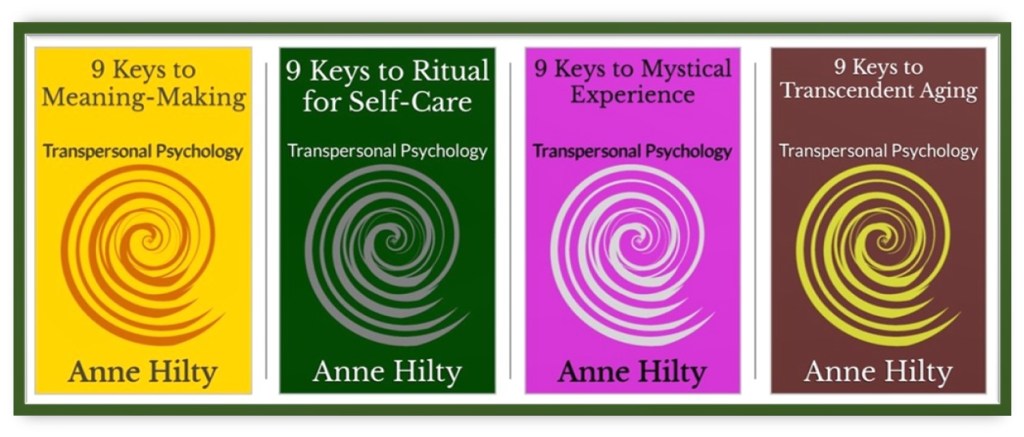
[excerpted from, 9 Keys to Ritual for Self-Care: Transpersonal Psychology ©2023]

The use of ritual for healing, and for wellbeing, is our first key.

Naturally, I must state upfront: this is not in any way intended to replace medical care or the advice of professionals. Nor, for that matter, is it a ‘New Age’ approach of magical thinking in which we simply wish away our illness – or be told that we’re weak, if we cannot.

Instead, in recognition of the psychological power of personal as well as collective ritual, this application is primarily for emotional healing. As we’ve seen, ritual has been shown beneficial in resilience and in coping with stress, and even in pain tolerance, as well as in reframing our thought patterns that don’t serve us – all of which contribute to healing in many forms.

We can use ritual, then, to heal our emotions from old, unresolved grief; in letting go of resentment and being able to forgive; in healing the response to trauma, and more. We can apply it to ourselves, our relationships, our societies, and our natural world.

No, wishing won’t make it so. But it does have the potential to alter the landscape of our own psyche. And, in the Buddhist belief of becoming our best selves, and even transcending self, in order to contribute to the health of all humanity and thereby the planet, we can do our part by healing our emotional wounds.

When I was a very young adult, just 22 years of age, I found myself the focus of a group healing ritual. I had not yet completed even my first psychology degree (though I’d been working in health care since the age of 16), but I had begun my own exploration of personal ritual. In this setting, as 5 other women held their healing ritual with me lying in the center, and which I’d entered with no particular objective, I suddenly found myself contemplating an old wound from childhood and the perpetrator; as I focused on this image, just as suddenly I experienced an opening sensation in my chest, an empty space and a lightness of being – and when I tried after the ritual (which was conducted in silence, by the way, so no one was directing my experience apart from myself) to bring forward the woundedness and resentment I’d been carrying for years, it was entirely resolved. Much like one’s tongue searching for the tooth that’s no longer there, as I thought at the time, I couldn’t call up that old pain even when I tried.

There are numerous examples of ritual used for healing, and the mental health and wellbeing outcomes of religious healing rituals and prayer have been well documented across religions (Dein, 2020).  The shaman in Africa heals in ways that can be correlated with principles of transpersonal psychology (Marovic & Machinga, 2017); religious as well as secular rituals of healing are longstanding in Greece (Dallas et al., 2020).

Rituals have been integrated into couples and family therapy (Imber-Black (2019), and have helped family systems to become more resilient (Harrist et al., 2019). Healing rituals have been used to identify and transform shame in both individual and group contexts (Mayer, 2019), and in a unique form known as ‘moral injury’, such as in veterans who, in the course of military duty, committed acts against their moral code and must find a way to forgive themselves (Brock, 2020; Ramsay, 2019).

Ritual has also been used in clinical settings for both patients and professionals. It’s been applied in palliative or comfort care, when cure is no longer possible, as a means of emotional healing (van der Weegen et al., 2019). And it’s been used by hospital chaplains as a means of healing for medical staff in distress and burnout – such as in our recent pandemic (Klitzman et al., 2022).

So, what would a healing ritual look like?

Naturally, it can take whatever form suits you, your belief system, and your purpose. As a sample, following the preparatory phase as described in our introduction, you could begin by altering consciousness with a focus on deep and steady breathing, while in a reclining posture; this may be followed by visualization in which you imagine yourself lying in a meadow of wildflowers, with a warm sun above and a gentle breeze wafting as butterflies flit around. You might then envision the appearance of a personally significant healer image (Mother Mary? a shaman? your grandmother? yourself?), who sits alongside. Placing your own hands on your chest in a self-soothing gesture, you can then take the imagined scene through to its natural conclusion of being healed by this figure, of releasing whatever emotional content needs healing, allowing for transformation to occur. When the body of the ritual comes to a natural conclusion, a gentle reentry to the waking state occurs, followed by reflection.

This is but one example. A suggestion is to write a script of such a scene in advance, and record it in your own voice, soft and soothing as if speaking to an anxious child, filled with love and compassion. As you go through such an imaginative experience, you can listen to the recording of your own voice—you, talking to your inner self, a powerful message to the unconscious.

.

Exercises:

First, a process of clarity: what needs healing? Even if known, nuances and detail may be useful in directing your ritual more specifically (e.g., you may have a physical condition – but there may also be heretofore unknown emotional content attached). To gain clarity, you can meditate on this question of ‘what needs healing?’ or do some journal-writing on the topic; or, you can conduct a mind-mapping brainstorm session with ‘healing’ in the center of the page surrounded by as many associations as possible, with lines drawn between them denoting connections.

Once you’ve gained clarity, design your ritual. Simple or elaborate? One part, or several? Short or long? Details? Meaning? The more personally designed, the more powerful its impact.

Do you need props? Candles, incense, flowers, significant objects, foods, music/sounds, poems? Again, your choice – whatever makes the ritual feel more significant to you. Again, this is your conscious mind communicating with your own unconscious.

Consider how you want to prepare, open, close, reflect; most importantly, what will the main phase of the ritual look like? And, what method will you use to alter your state of consciousness?

Once designed, take another few moments to sit quietly and imagine it, from start to finish – while allowing for flexibility in its execution.

In other related rituals, you can vary your script and approach – for other forms of healing, or this healing from other approaches, and so on.

One option: a visualization of yourself in a natural setting, as mentioned above, but being healed by nature itself. Another: receive a reiki or other type of healing therapy session, but within ritual context (i.e., design and prepare your ritual; open it, receive the healing session, and close the ritual).

The most basic form: open your ritual (i.e., set the tone); lie down, and imagine golden light within you, filling and warming you, cascading over you like sun-filled warm water; stay with this as long as feels right, then slowly ‘emerge’ and close the ritual. If heat (e.g., fever or inflammation) is something you’re already experiencing, you can cool this down; imagine the light as a pale blue, cascading over and cooling you instead.

Or: same as above, but envision yourself as a balloon, letting air (negative emotion) out little by little; or similarly, but imagining your body as a bag of sand, with a tiny hole from which sand (again, unwanted emotion) sifts out slowly. If seeking added energy instead, the opposite of each can be used – balloon slowly filling with air; sandbag body filling little by little until substantial.

You get the idea. Play around with the concept, as it works for you.

.

References:

Brock RN (2020). Moral conscience, moral injury, and rituals for recovery. In, Moral Injury and Beyond (pp. 37-52). Routledge.

Dallas T, Baroutsa NM and Dein S (2020). The power of the divine: religion, rituals, and healing in Greece. Mental Health, Religion & Culture 23:8, 718-732. https://doi.org/10.1080/13674676.2020.1825363

Dein S (2020). Religious healing and mental health, Mental Health, Religion & Culture 23:8, 657-665. https://doi.org/10.1080/13674676.2020.1834220

Harrist AW, Henry CS, Liu C et al. (2019). Family resilience: The power of rituals and routines in family adaptive systems. In: Fiese BH, Celano M, Deater-Deckard K, Jouriles EN, and Whisman MA (eds), APA handbook of contemporary family psychology: Foundations, methods, and contemporary issues across the lifespan (pp. 223–239). American Psychological Association. https://doi.org/10.1037/0000099-013

Imber-Black E (2019). Rituals in contemporary couple and family therapy. In: Fiese BH, Celano M, Deater-Deckard K, Jouriles EN, and Whisman MA (eds), APA handbook of contemporary family psychology: Family therapy and training (pp. 239–253). American Psychological Association. https://doi.org/10.1037/0000101-015

Klitzman R, Al-Hashimi J, Natarelli GDS et al. (2022). How hospital chaplains develop and use rituals to address medical staff distress. SSM-Qualitative Research in Health 2:100087. https://doi.org/10.1016/j.ssmqr.2022.100087

Marovic Z and Machinga MM (2017). African shamanic knowledge and transpersonal psychology: Spirits and healing in dialogue. Journal of Transpersonal Psychology 49:1.

Mayer CH (2019). Healing Rituals to Transform Shame: An Example of Constellation Work. In: Mayer CH and Vanderheiden E (eds), The Bright Side of Shame. Springer, Cham. https://doi.org/10.1007/978-3-030-13409-9_34

Ramsay NJ (2019). Moral Injury as Loss and Grief with Attention to Ritual Resources for Care. Pastoral Psychology 68, 107-125. https://doi.org/10.1007/s11089-018-0854-9

van der Weegen K, Hoondert M, Timmermann M et al. (2019). Ritualization as Alternative Approach to the Spiritual Dimension of Palliative Care: A Concept Analysis. Journal of Religion and Health 58, 2036-2046. https://doi.org/10.1007/s10943-019-00792-z

Mystical Experience, Key #1: Reaching the Peak

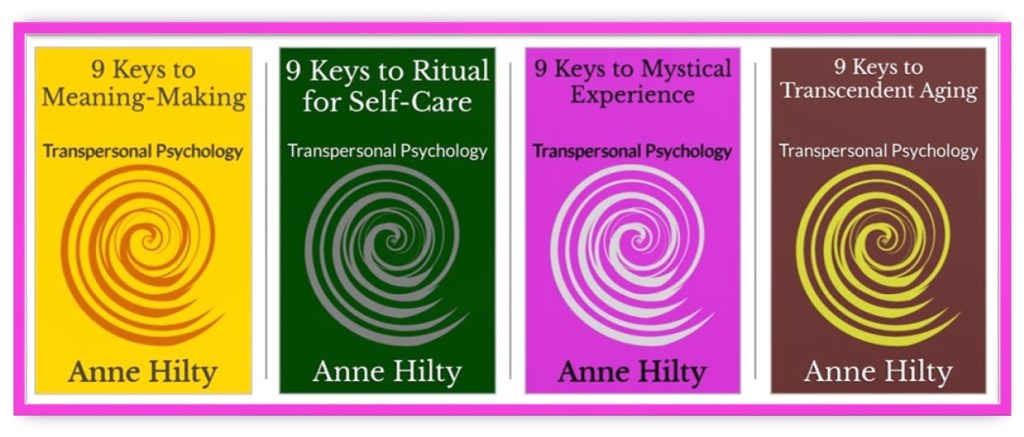
[excerpted from, 9 Keys to Mystical Experience: Transpersonal Psychology ©2023]

We begin at the peak.

Some achieve peak experience once in a lifetime – the birth of a baby, an exquisite sunset, a moment of sheer joy in which we feel that the top has been lifted off of our head, our heart has burst open in song, something within us has changed forever – while others never have such a moment, and for yet others, it occurs with some regularity. The more one seeks self-actualization or advanced psychological development, the more likely these transcendent moments are, though never common.

Having pursued this sort of endeavor for more than 40 years now, I have been delighted by quite a few such moments. The most profound such, in addition to those in nature which I regularly seek, have occurred when I’ve been in the presence of someone in their dying moments as they transition. This first occurred when, at just 16 years of age, I began work as a nurse’s aide in a geriatric facility; over the course of 4 years, I had quite a few experiences of sitting with people in their dying moments, gently washing their bodies as a way of caring for them even after death. Later in my 30s, I volunteered in hospice care with similar experiences. As with birth, witnessing someone’s death is a profoundly transforming experience.

In this era of active psychedelic research, some would substitute ‘mystical experience’ with this construct of peak experience, rejecting the former as religious or paranormal and therefore not scientific, or at the least unable to be adequately measured. While both are transcendent in their impact, they simply aren’t the same, however; reaching the mountaintop and being overcome by the beauty one finds there is quite different from encountering entities or hearing the voice of a god – or a rock. Peak experience can surely facilitate mystical experience, which is why we begin with this key – but it is the means, not the mystical itself.

Psychologist Dr Abraham Maslow (yes, he of that pyramid-shaped ‘hierarchy of human needs’), who first established humanistic psychology and was one of the founders of transpersonal psychology as well, gave us this concept of ‘peak experiences’, events that engender awe and bliss, and are transcendent. The concept of ‘flow’, or complete absorption while working toward some goal, especially when involving creativity or innovation, is one type of peak experience (Csikszentmihalyi & Nakamura, 2018).

The associated emotion of awe, or wonder coupled with a sense of reverence, a vastness of feeling often ineffable, is especially transcendent (Chen & Mongrain, 2020; Lin et al., 2020). It has been correlated with a myriad of psychological benefits and inspired various therapeutic approaches (Tanhan et al, 2022) and scales of measurement (Yaden et al., 2019), and is a key focus in both transpersonal and positive psychology.

Related to awe, and surely elements of the peak experience, are the emotions of euphoria or bliss, and ecstasy, similar terms but varying degrees of transcendence. Euphoria and bliss focus on ultimate happiness or pure joy, while ecstasy is a sense of immense pleasure and includes an element of self-transcendence – the feeling of being ‘beside oneself’, overcome by positive emotion with some loss of self-awareness. Divine ecstasy in particular is closely associated with mystical experience, revelatory in nature and long aligned with transcendent religious phenomena. In fact, many early practices of worship were ecstatic in nature, from worship in ancient Greece and Phrygia to shamanism that spread from the steppe region of Siberia.

A primary source of peak experience is the natural world. We’re coming to that as our second key to mystical experience, in fact, but suffice it to say, it’s easy to find oneself overcome by the sheer beauty of nature. Moral beauty is another such, and the appreciation of beauty and excellence (aka moral beauty) is one of the character traits in positive psychology, a relatively new approach. Moral beauty as a source of awe, for example, may be seen in courage, profound kindness, or self-sacrifice. We can also achieve peak experience in witnessing other forms of beauty – music, visual or performance art, spirituality itself – and so much more.

Electronic dance music, particularly the trance genre, is focused specifically on engendering peak experience (Solberg and Dibben, 2019), as are augmented reality video games (Molnár and Szűts, 2019). Meditation is another means to this state, especially among experienced meditators on long and intensive retreats; as such directly engages the unconscious, these peak experiences may also be in the form of negative memories or overwhelming emotion, but are ultimately seen as more beneficial than adverse (Hadash et al., 2023).

It’s been argued that research of peak experience and its subcategory of flow has been inconsistent, the terms too widely applied including general task absorption (Abuhamdeh, 2020), with which I surely agree. The peak experience is an optimal state of consciousness, the ‘highest’ we can go, transcendent as the selfhood recedes into the background and we are overcome with pure joy, happiness, or pleasure by the beauty and excellence before us.

So – how to achieve peak experience?

.

Exercises:

We can’t directly facilitate peak experiences as they occur spontaneously, but we can create environments conducive to same.

One such is to immerse yourself in nature on a regular basis. The natural environment is one of the most common for peak experiences, as we marvel at the beauty around us, happen across something unexpected, or find ourselves interacting in some way with the wildlife. Often, peak experience is the result of a combination of factors; as you gaze out at the vista before you, hearing birdsong and the nearby stream, feeling sunlight on your face and a breeze ruffling your hair, you may find that a feeling of bliss descends over you and this moment suddenly seems sacred, in its own bubble outside of space and time.

Engage in creativity regularly. When we are drawing, painting, writing, cooking, composing, sculpting, or any other form, having minimized all distractions, we may find ourselves slipping into ‘the zone’ or a flow state of complete absorption, filled with contentment and joy.

If you do like to write, keeping a journal can sometimes engender peak experience. This is most likely when you carve out a special place and time for writing, perhaps while sitting beneath your favorite tree or at the shore, or curled up in your favorite nook at home with a candle lit, soft music playing, and minimal interruption; as the writing flows, spontaneous and uncontrolled, almost as if separate from your direct input, you may find yourself in liminal space – and peak experience.

A regular practice of mindfulness, both meditation and lifestyle, helps to encourage this phenomenon. As we begin to notice and to cherish even the small details of our day, we may find ourselves occasionally overcome by the wonder and beauty that is all around us.

Reminiscence concerning previous peak experiences can also help, reminding our brains of the sensations and emotions attached. You can encourage this by quieting your mind, shutting out all distraction much as you would for meditation, closing your eyes and slowing your breathing, and recalling in as much detail as possible a prior peak experience. You may even find yourself having the experience all over again, this time stimulated by your memory of it.

If you enjoy adventure, the exhilaration of a bungee jump or whitewater rafting for example, then you are already familiar with peak experience; the bliss that can accompany such moments is precisely what we seek, along with the sense that everything has coalesced into this one, perfect moment.

Encountering truly exquisite beauty and excellence can also trigger peak experience; if you are a lover of art, you may already be aware of this. Attending art shows and symphonies, sports events or expert presentations, may all help. Similarly, you can listen to a symphony at home, with headphones, eyes closed, and your complete attention.

Embrace novelty, travel to new and unusual places, witness a birth if possible (animals too), or get up each day to witness the sunrise. Bliss. Mystical.

.

References:

Abuhamdeh S (2020). Investigating the “Flow” Experience: Key Conceptual and Operational Issues. Frontiers in Psychology 11:158. https://doi.org/10.3389/fpsyg.2020.00158

Chen SK and Mongrain M (2021). Awe and the interconnected self. Journal of Positive Psychology 16:6, 770-778. https://doi.org/10.1080/17439760.2020.1818808

Csikszentmihalyi M and Nakamura J (2018). Flow, Altered States of Consciousness, and Human Evolution. Journal of Consciousness Studies 25:11-12, 102-14.

Hadash Y, Veksler T, Dar O et al. (2023). Peak Experiences During Mindfulness Meditation Retreats and Their Salutary and Adverse Impact: A Prospective Matched-Controlled Intervention Study. PsyArXiv. https://doi.org/10.31234/osf.io/k782g

Lin RM, Hong YJ, Xiao HW et al. (2020). Dispositional awe and prosocial tendency: The mediating roles of self-transcendent meaning in life and spiritual self-transcendence. Social Behavior and Personality 48:12, 1-10. https://doi.org/10.2224/sbp.9665

Molnár G and Szűts Z (2019). Augmented Reality, Games and Art: Immersion and Flow. In: Geroimenko V (ed), Augmented Reality Games I. Springer, Cham. https://doi.org/10.1007/978-3-030-15616-9_5

Solberg RT and Dibben N (2019). Peak experiences with electronic dance music: Subjective experiences, physiological responses, and musical characteristics of the break routine. Music Perception: An Interdisciplinary Journal 36:4, 371-89. https://doi.org/10.1525/mp.2019.36.4.371

Tanhan F, Deniz ME, and Akgün GE (2022). Awe Therapy: Fundamentals, Formulation and Usage Area. Turkish Psychological Counseling and Guidance Journal 12:65, 300-319. https://doi.org/10.17066/tpdrd.1138530

Yaden DB, Kaufman SB, Hyde E et al. (2019). The development of the Awe Experience Scale (AWE-S): A multifactorial measure for a complex emotion. Journal of Positive Psychology 14:4, 474-488. https://doi.org/10.1080/17439760.2018.1484940